
Understanding Canada’s 2026 Nature Strategy: A Force of Nature
Emily Lorra Hines for FLOW
The Canadian Government published “A Force of Nature: Canada's Strategy to Protect Nature” in March 2026. This is a breakdown of the commitments in the strategy under a freshwater lens. The overview includes stats, quotes, terms to know and an overview of commitments.
The Numbers:
Canada is investing 3.8 billion to protect nature, focused on measurable delivery and outcomes through 2030.
The estimated costs of ecosystem services amount to $3.6 trillion
Aim to increase terrestrial conservation from 14% to 30% by 2030
Aim to increase marine conservation from 15.5% to 28% by 2030
The federal government owns only 6% of Canada’s land, 4.7% of which is protected
Since 2007, the Government of Canada has invested $505million, marked by $1.15 billion from partners
The estimated value of ecosystem services from national parks is $372 billion, with 44 billion attributed to ecosystem services that provide freshwater
There are 240 land-based OECMs and 61 OECMs across Canada.
Forests and wetlands protect 3.7 million people in 358 Canadian cities and towns, and another 20.1 million people and businesses indirectly.
It is estimated that the annual funding gap globally, from all sources, to meet the commitments in the KMGBF has grown to over $1 trillion USD
Existing funding amounts for approx. $313 billion USD annually, of which 80% comes from public sources.
Canada’s wetlands provide ~$225 billion per year in ecosystem services related to water quality and climate, and Canada’s boreal forests contribute ~$703 billion per year in ecosystem services (i.e., carbon storage, flood and pest control).
Federally listed species at risk have increased from 233 in 2003 to 671 in 2025 (188% increase)
Only 8.6% of the world’s oceans are currently protected
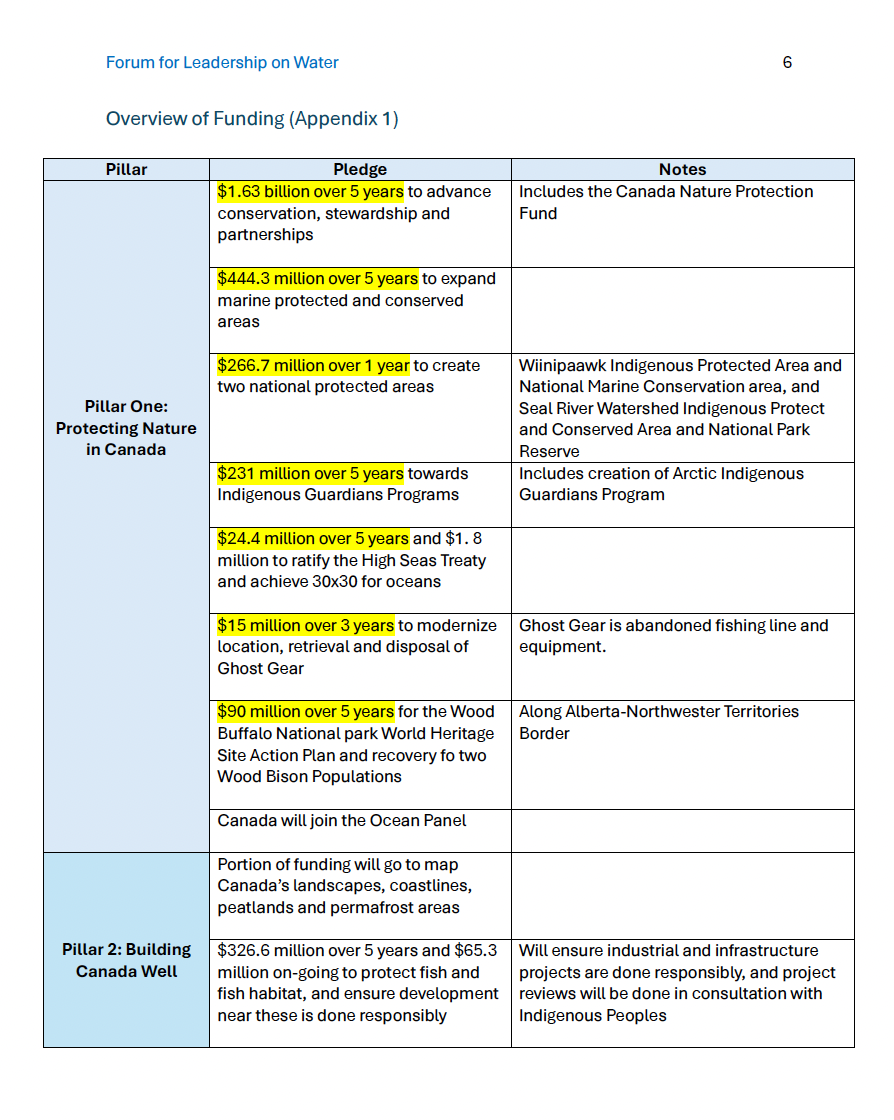
At A Glance
The Government of Canada is investing $3.8 billion in nature, largely structured through the 30x30 goals Protect 30% of lands and oceans by 2030
Protecting Nature in Canada: Investing in the creation of more nationally protected areas, relationships and agreements to increase the % of lands and waters protected.
Building Canada Well: Putting nature at the heart of construction, development and infrastructure, and making sure to build Canada while protecting our lands.
Valuing Nature and Mobilizing Capital: Creating Expert panel to value and account for ecosystem services and attract private financing for nature.
Largely, freshwater is ignored in this strategy, instead conflated with land protection actions (as opposed to marine) under 30x30.